Warning that Islamic extremists need to impose fundamentalist non secular rule in American communities, right-wing lawmakers in dozens of U.S. states have tried banning Sharia, an Arabic time period usually understood to imply Islamic legislation.
These political debates – which cite terrorism and political violence in the Middle East to argue that Islam is incompatible with fashionable society – reinforce stereotypes that the Muslim world is uncivilized.
Additionally they replicate ignorance of Sharia, which isn’t a strict authorized code. Sharia means “path” or “method”: It’s a broad set of values and moral ideas drawn from the Quran – Islam’s holy ebook – and the lifetime of the Prophet Muhammad. As such, completely different folks and governments could interpret Sharia otherwise.
Nonetheless, this isn’t the primary time that the world has tried to determine the place Sharia suits into the worldwide order.
Within the 1950s and 1960s, when Nice Britain, France and different European powers relinquished their colonies in the Middle East, Africa and Asia, leaders of newly sovereign Muslim-majority international locations confronted a choice of huge consequence: Ought to they construct their governments on Islamic non secular values or embrace the European legal guidelines inherited from colonial rule?
The massive debate
Invariably, my historical research exhibits, political leaders of those younger international locations selected to maintain their colonial justice programs relatively than impose non secular legislation.
Newly impartial Sudan, Nigeria, Pakistan and Somalia, amongst different locations, all confined the applying of Sharia to marital and inheritance disputes inside Muslim households, simply as their colonial directors had accomplished. The rest of their legal systems would continue to be based on European law.
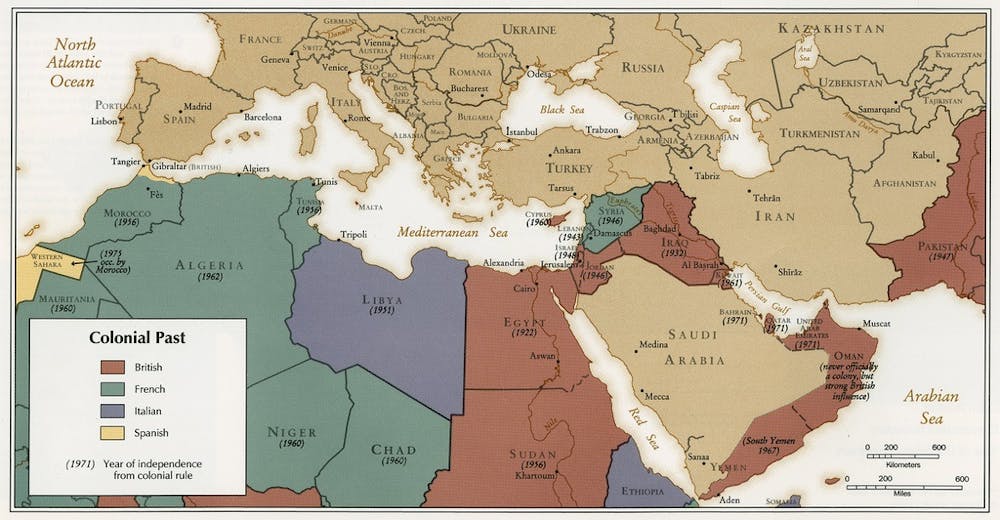
To know why they selected this course, I researched the decision-making course of in Sudan, the primary sub-Saharan African nation to realize independence from the British, in 1956.
Within the nationwide archives and libraries of the Sudanese capital Khartoum, and in interviews with Sudanese attorneys and officers, I found that main judges, politicians and intellectuals truly pushed for Sudan to develop into a democratic Islamic state.
They envisioned a progressive legal system consistent with Islamic faith ideas, one the place all residents – irrespective of faith, race or ethnicity – might apply their non secular beliefs freely and brazenly.
“The Individuals are equal just like the enamel of a comb,” wrote Sudan’s soon-to-be Supreme Courtroom Justice Hassan Muddathir in 1956, quoting the Prophet Muhammad, in an official memorandum I discovered archived in Khartoum’s Sudan Library. “An Arab isn’t any higher than a Persian, and the White isn’t any higher than the Black.”
Sudan’s post-colonial management, nonetheless, rejected these calls. They selected to maintain the English frequent legislation custom because the legislation of the land.
Why preserve the legal guidelines of the oppressor?
My research identifies three explanation why early Sudan sidelined Sharia: politics, pragmatism and demography.
Rivalries between political events in post-colonial Sudan led to parliamentary stalemate, which made it tough to cross significant laws. So Sudan merely maintained the colonial legal guidelines already on the books.
There have been sensible causes for sustaining English frequent legislation, too.
Sudanese judges had been educated by British colonial officers. So that they continued to apply English frequent legislation ideas to the disputes they heard of their courtrooms.
Sudan’s founding fathers confronted urgent challenges, equivalent to creating the financial system, establishing international commerce and ending civil battle. They felt it was merely not wise to overtake the relatively smooth-running governance system in Khartoum.
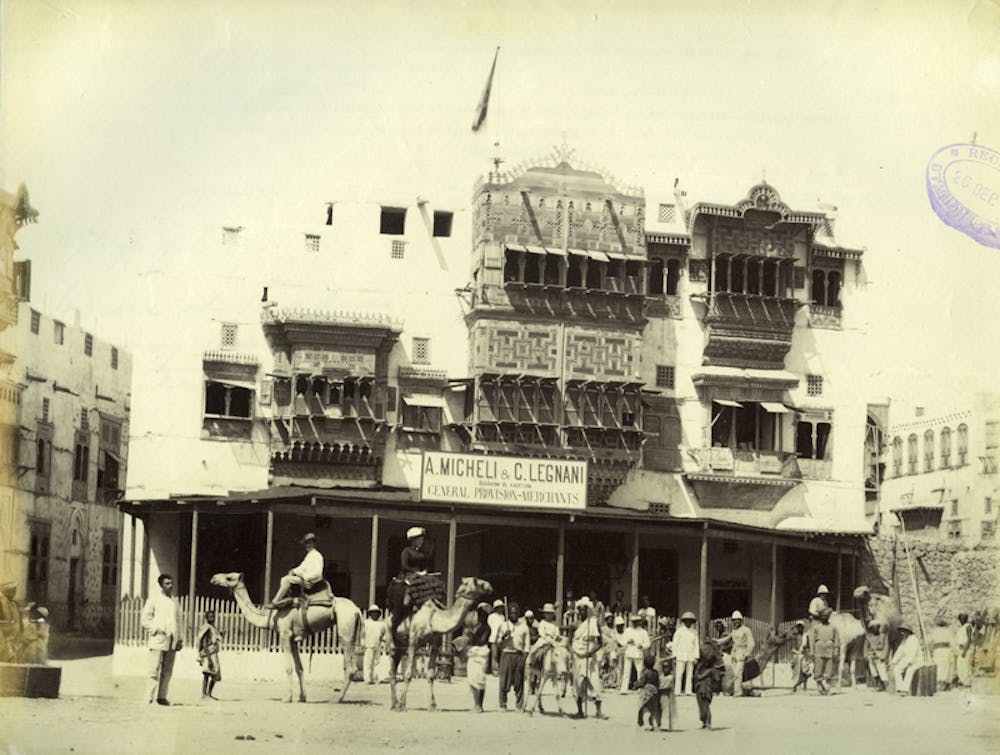
The continued use of colonial legislation after independence additionally mirrored Sudan’s ethnic, linguistic and non secular diversity.
Then, as now, Sudanese residents spoke many languages and belonged to dozens of ethnic teams. On the time of Sudan’s independence, folks training Sunni and Sufi traditions of Islam lived largely in northern Sudan. Christianity was an necessary religion in southern Sudan.
Sudan’s variety of religion communities meant that sustaining a international authorized system – English frequent legislation – was much less controversial than selecting whose model of Sharia to undertake.
Why extremists triumphed
My research uncovers how right this moment’s instability throughout the Center East and North Africa is, partly, a consequence of those post-colonial selections to reject Sharia.
In sustaining colonial authorized programs, Sudan and different Muslim-majority international locations that adopted an analogous path appeased Western world powers, which had been pushing their former colonies toward secularism.
However they averted resolving powerful questions on non secular identification and the legislation. That created a disconnect between the folks and their governments.
In the long term, that disconnect helped gas unrest amongst some residents of deep religion, resulting in sectarian calls to unite religion and the state once and for all. In Iran, Saudi Arabia and components of Somalia and Nigeria, these interpretations triumphed, imposing extremist variations of Sharia over hundreds of thousands of individuals.
In different phrases, Muslim-majority international locations stunted the democratic potential of Sharia by rejecting it as a mainstream authorized idea within the 1950s and 1960s, leaving Sharia within the palms of extremists.
However there isn’t any inherent pressure between Sharia, human rights and the rule of legislation. Like every use of faith in politics, Sharia’s utility depends upon who’s utilizing it – and why.
Leaders of locations like Saudi Arabia and Brunei have chosen to limit women’s freedom and minority rights. However many students of Islam and grassroots organizations interpret Sharia as a flexible, rights-oriented and equality-minded moral order.
Faith and the legislation worldwide
Faith is woven into the authorized cloth of many post-colonial nations, with various penalties for democracy and stability.
After its 1948 founding, Israel debated the position of Jewish legislation in Israeli society. In the end, Prime Minister David Ben-Gurion and his allies opted for a combined authorized system that mixed Jewish legislation with English frequent legislation.
In Latin America, the Catholicism imposed by Spanish conquistadors underpins legal guidelines limiting abortion, divorce and gay rights.
And all through the 19th century, judges within the U.S. usually invoked the legal maxim that “Christianity is a part of the frequent legislation.” Legislators nonetheless routinely invoke their Christian religion when supporting or opposing a given legislation.
Political extremism and human rights abuses that happen in these locations are hardly ever understood as inherent flaws of those religions.
In terms of Muslim-majority international locations, nonetheless, Sharia takes the blame for regressive legal guidelines – not the individuals who cross these insurance policies within the title of faith.
Fundamentalism and violence, in different phrases, are a post-colonial drawback – not a non secular inevitability.
For the Muslim world, discovering a system of presidency that displays Islamic values whereas selling democracy won’t be simple after greater than 50 years of failed secular rule. However constructing peace could demand it.
This text is republished from The Conversation, a nonprofit information web site devoted to sharing concepts from educational consultants.
Learn extra:
Mark Fathi Massoud has obtained fellowships from the John Simon Guggenheim Memorial Basis, the Carnegie Company of New York, the American Council of Discovered Societies, the Andrew Mellon Basis, Fulbright-Hays, and the College of California. Any views expressed listed here are the writer’s accountability.
Supply: news.yahoo.com